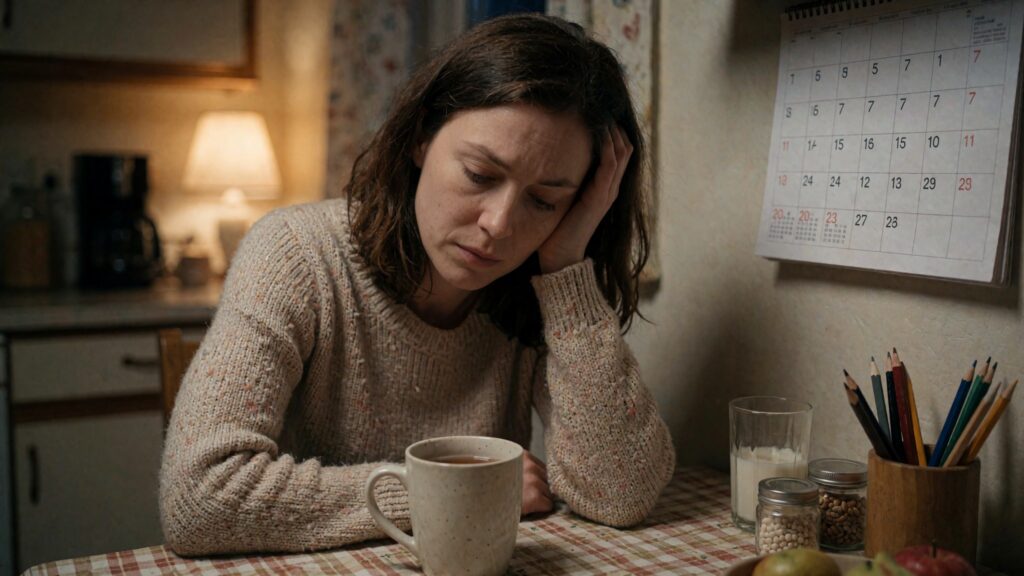
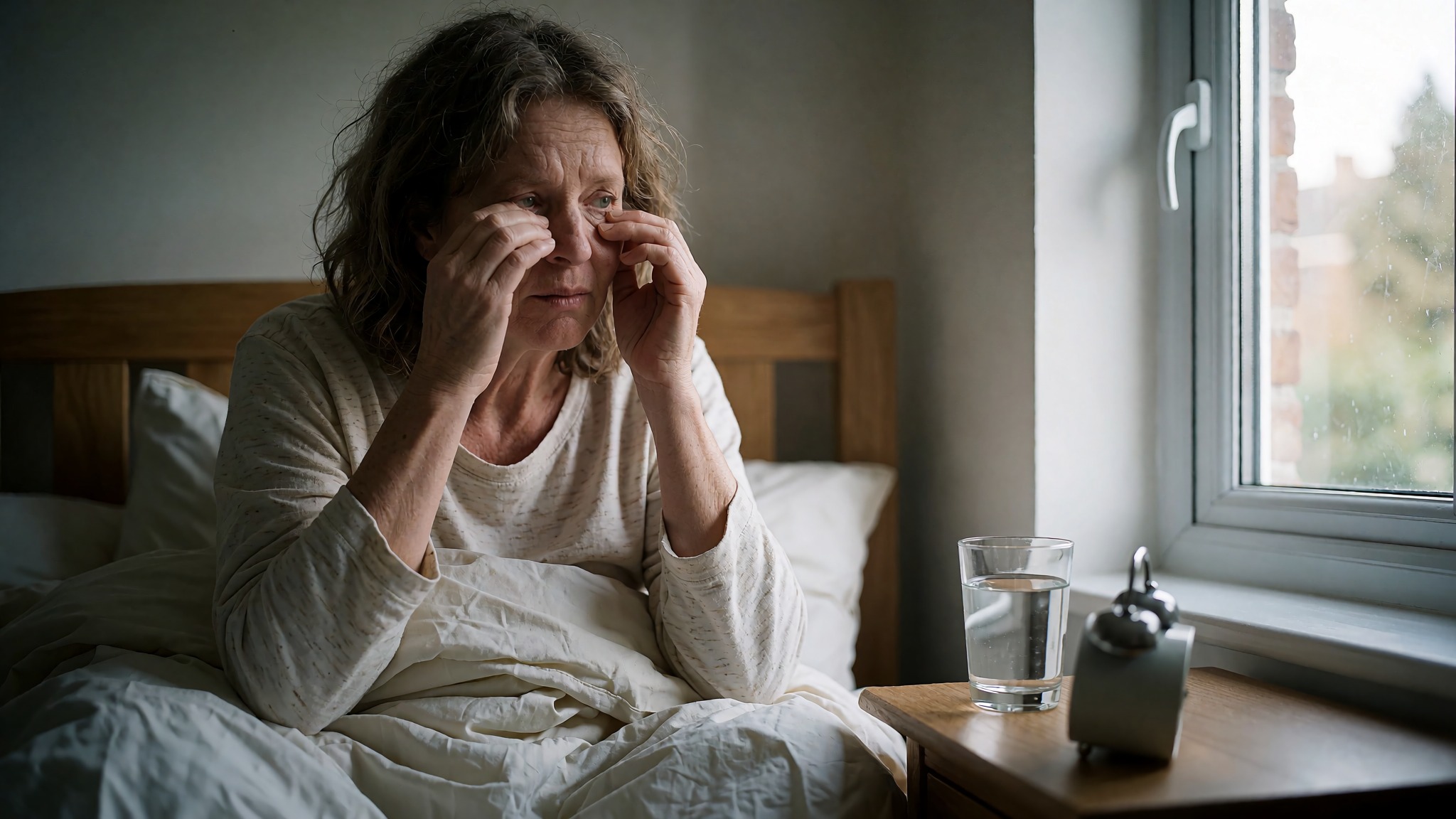
If your periods have gone a bit unpredictable, your sleep has gone to pieces, and you keep wondering why you feel like a different person some weeks, you might be in perimenopause even if nobody has said that word to you yet. It is the stage before your periods stop completely, when your hormone levels start to rise and fall unevenly rather than dropping once and staying low. The NHS describes it as the time when you have menopause-type symptoms while your periods are still happening, sometimes for several years before they finally stop.
What is actually happening in your body
Your ovaries do not switch off overnight. In the years leading up to menopause, they start releasing eggs less predictably, and your oestrogen and progesterone levels swing about rather than falling in a straight line. That is why perimenopause can feel so inconsistent: a calm fortnight followed by a week where your mood, your sleep and your periods all seem to misbehave at once. The British Menopause Society explains that this hormonal fluctuation, not a steady decline, is what causes most of the symptoms. It is also why blood tests are not always useful for diagnosing it. NICE guidance (NG23) says a woman over 45 with typical symptoms can usually be diagnosed on her symptoms alone, without a blood test, because hormone levels change too much from day to day to give a reliable picture.
What age does perimenopause start
There is no single age, and that is worth saying plainly because so many women feel caught out by it. The NHS puts the average age of menopause itself, meaning twelve months with no period at all, at 51 in the UK. Perimenopause comes before that, and for most women it begins somewhere in their mid to late forties. Some notice changes earlier, in their late thirties or early forties, and that is still within the normal range. If you are under 45 and having symptoms, or under 40 and your periods have become irregular or stopped, the Royal College of Obstetricians and Gynaecologists advises getting this checked by a GP, since premature or early menopause needs a different kind of support and sometimes treatment to protect your long-term bone and heart health.
The signs people miss
Hot flushes and night sweats get all the attention, and yes, they are common. But perimenopause shows up in quieter ways too, and I think these are the ones that catch women off guard because nobody told them to expect them:
Periods that become heavier, lighter, closer together or further apart than usual. Trouble sleeping, even on nights when nothing is obviously wrong. Mood changes that feel out of character: low patches, irritability, or anxiety that was not there before. Brain fog, meaning word-finding trouble or forgetting why you walked into a room. A lower sex drive, or vaginal dryness and discomfort that was not an issue before. Joint aches, headaches that change pattern, and weight that seems to redistribute around the middle no matter what you are doing differently.
The mental health side matters as much as the physical one. Mind points out that the hormonal shifts of perimenopause can affect mood and anxiety levels directly, and that this is a real physiological effect, not just “a bad week.” If you already live with anxiety or depression, perimenopause can make things harder for a while, and that is worth naming to whoever supports your mental health, not just your GP.
What genuinely helps
Start with the basics that actually move the needle: regular sleep times where you can manage them, regular movement, cutting back on the evening alcohol and caffeine that make night sweats and poor sleep worse, and not smoking, since the NHS notes smokers tend to reach menopause earlier and with sharper symptoms. None of that fixes everything, and I am not going to pretend it does.
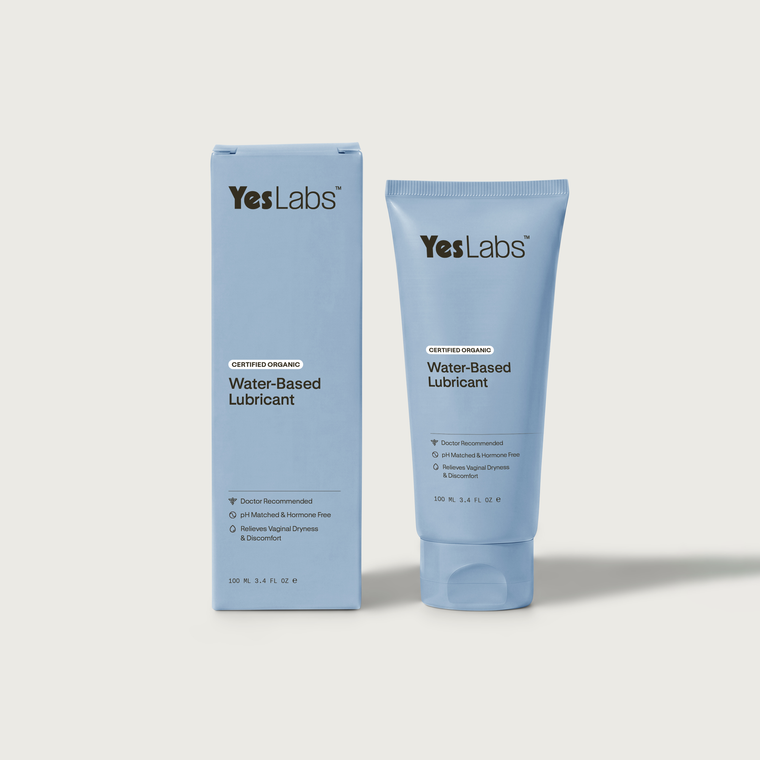
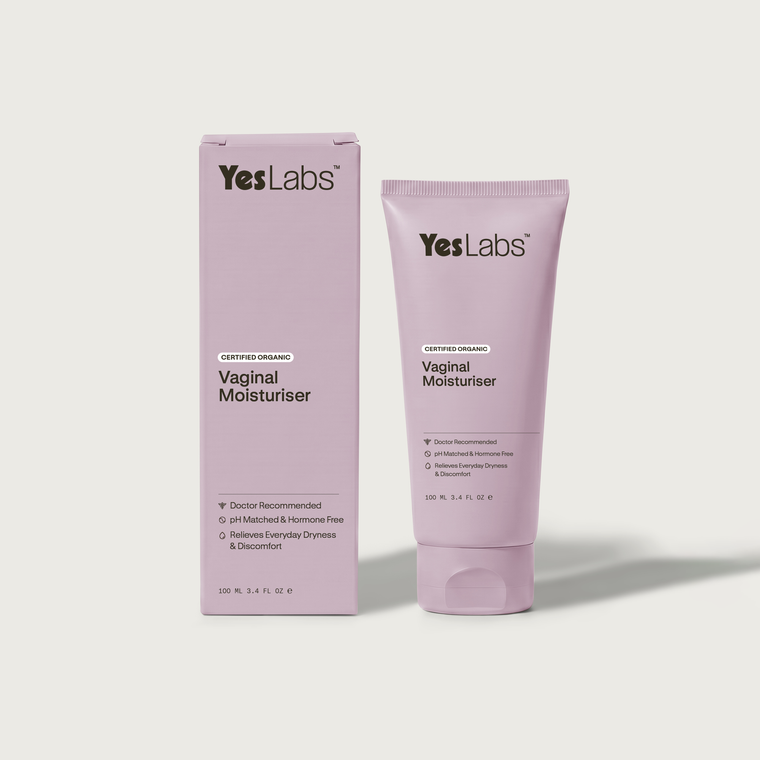
For vaginal dryness specifically, a vaginal moisturiser used regularly, separate from anything used during sex, can make a real difference to day-to-day comfort, and a lubricant can help with the discomfort some women notice during intimacy. If you want to see what that actually looks like, I have a page on the YES VM vaginal moisturiser and one on the YES WB water-based lubricant, both written up from what the maker says about them, since I have not used either myself.
Beyond that, talk to your GP about your options. NICE guidance says hormone replacement therapy (HRT) is an option worth discussing for many women with perimenopausal symptoms, and that the decision is personal, weighing your symptoms, your health history and what you are comfortable with. There are non-hormonal options too, including certain medications and talking therapies for mood symptoms, and a GP or menopause specialist can talk you through what fits your situation. A pharmacist is a good first stop if you just want general advice on managing day-to-day symptoms before you decide whether to book an appointment.
What I would say to a friend going through this: you are not imagining it, and you do not have to just put up with it quietly. Write down what you are noticing for a few weeks, periods, sleep, mood, anything physical, and take that list with you to the GP. It turns a vague “I feel off” into something a doctor can actually work with. Perimenopause is not a problem to be fixed in one appointment, but it is very much something you can get proper support for, and the earlier you start that conversation, the more comfortable the years leading up to menopause tend to be.