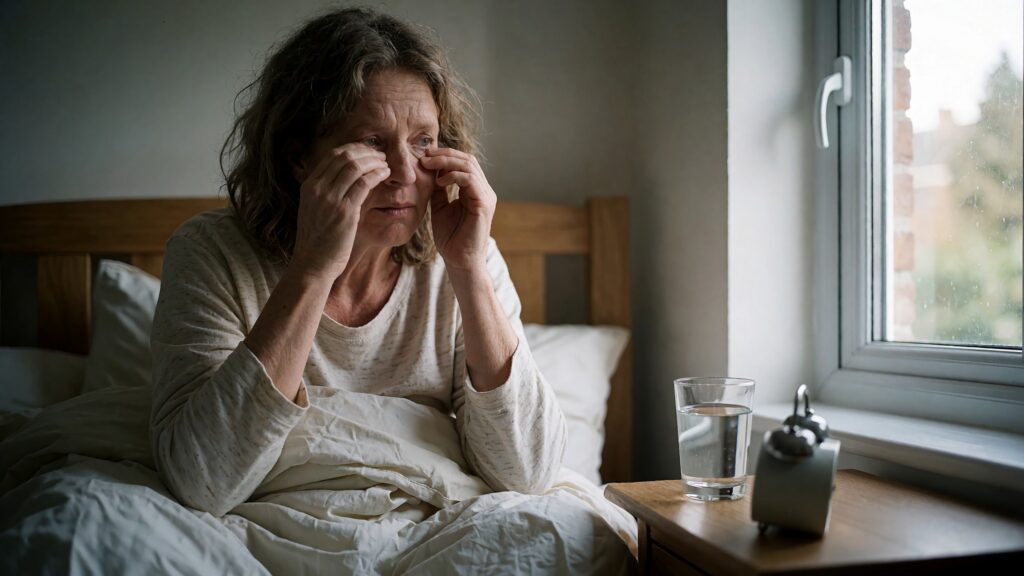
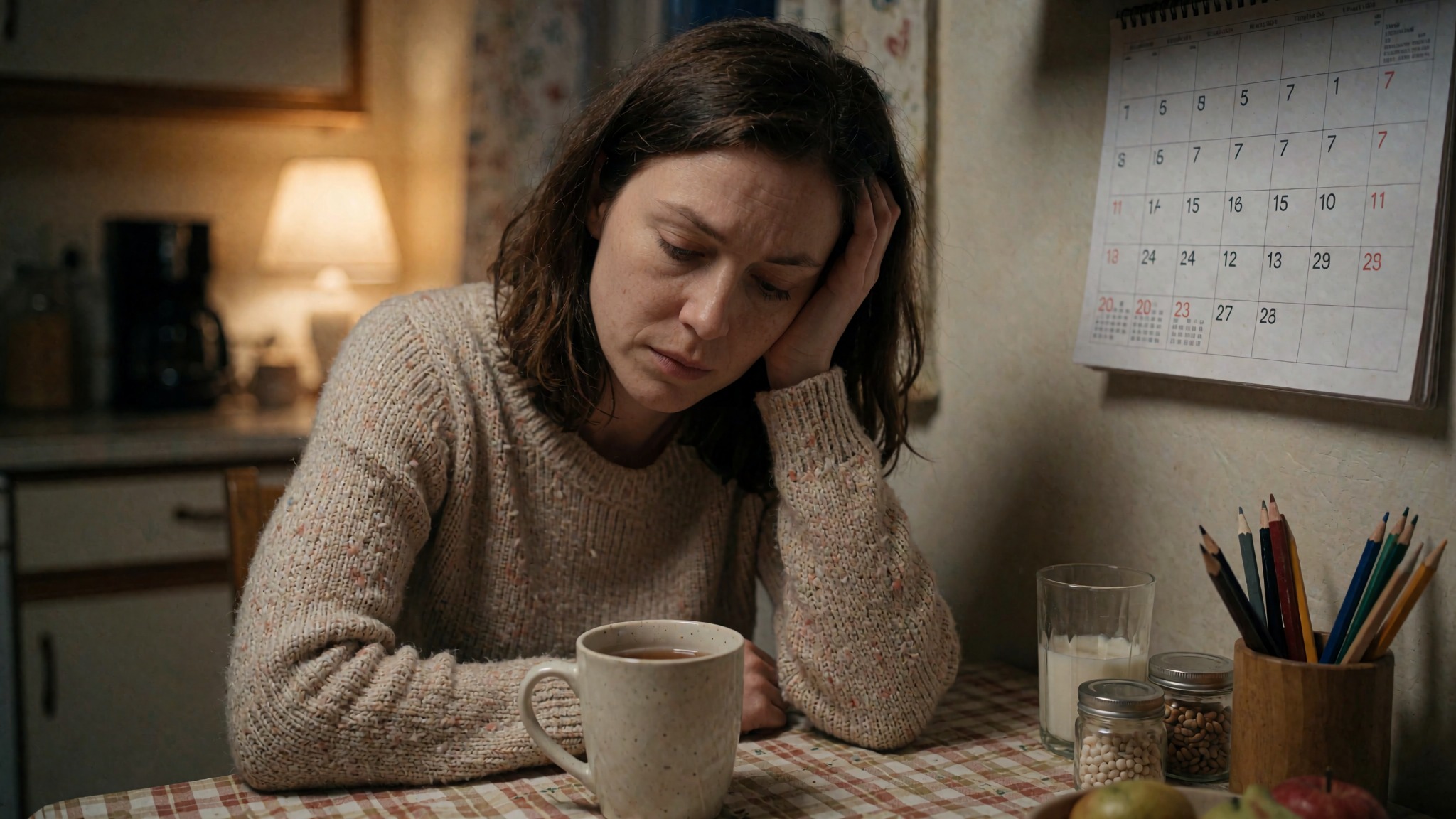
Ever had a stretch of days every month where you don’t feel like yourself at all? Not just a bit tearful or snappy, but properly flattened: the kind of low mood, rage or anxiety that makes you cancel plans and question your own sanity. For most of us, that’s garden variety PMS. For a smaller number of women, it’s something the NHS and NICE recognise as a separate condition: premenstrual dysphoric disorder, or PMDD. I’m not a doctor, so nothing here is a diagnosis. But I’ve done the reading, and I want you to walk away knowing the difference between PMS and PMDD, what the symptoms actually look like, and where in the UK you can get proper support.
What PMDD actually is
PMS, premenstrual syndrome, is common. Most women who have periods notice some physical or emotional changes in the week or two before their period starts: bloating, sore breasts, a shorter fuse, maybe a few tears at an advert that wouldn’t normally touch you. The NHS describes this as completely normal, and for most people it’s manageable with small changes and over the counter remedies.
PMDD is different. The NHS and the Royal College of Obstetricians and Gynaecologists (RCOG) describe it as a severe form of PMS, but that undersells how much it can take over someone’s life. PMDD sits in what’s called the luteal phase: the two weeks or so between ovulation and your period. Symptoms build in that window, then ease off within a few days of your period starting. The cycle then repeats, month after month.
What makes PMDD its own condition rather than “bad PMS” is that the symptoms are mainly psychological, not physical. It’s less about the bloating and more about mood, and the mood changes are severe enough to disrupt work, relationships and daily life. RCOG guidance also notes something useful: PMDD isn’t thought to come from abnormal hormone levels. It’s thought to come from a heightened sensitivity to the normal hormonal shifts of the cycle, which affect brain chemicals like serotonin. In plain terms, your hormones aren’t wrong. Your reaction to them, that month, is unusually strong.
The symptoms that set it apart
If you look at NHS guidance on PMDD, the symptoms it lists go well beyond the usual PMS checklist. They include:
- Deep, sudden low mood or feelings of hopelessness
- Irritability or anger that feels out of proportion and hard to control
- Anxiety, tension or a sense of panic
- Feeling overwhelmed or out of control
- Trouble concentrating
- Exhaustion that sleep doesn’t fix
- Changes in appetite, including cravings or overeating
- Sleep problems, whether that’s sleeping too much or barely at all
- Physical symptoms too, such as breast tenderness, joint or muscle pain, and bloating
The physical list overlaps with PMS. The emotional list is where PMDD properly diverges. A lot of women describe it as feeling like a different person for one to two weeks a month, then coming back to themselves almost overnight once their period arrives. That sudden switch, from struggling to cope one day to feeling completely fine a few days later, is one of the clearest signs this is PMDD rather than an unrelated mood problem.
This is also why PMDD gets missed so often. Taken on its own, in the middle of a bad week, low mood, anxiety and a short temper look exactly like generalised anxiety or depression. A GP seeing you once, mid cycle, has no easy way to know it’s cyclical unless you tell them, or unless the pattern is written down. The condition hides inside an ordinary mood disorder until someone lines it up against the calendar.
How to tell it apart from PMS
The honest answer is that you can’t always tell from a single month, which is exactly why NICE guidance recommends tracking symptoms across at least two menstrual cycles before anyone, including a GP, draws conclusions. A simple daily diary, noting your mood, energy and physical symptoms alongside where you are in your cycle, does the job. There are also free symptom tracker apps built for exactly this.
What you’re looking for is a pattern: symptoms that reliably turn up in the days before your period and reliably ease within a few days of it starting, rather than low mood or anxiety that drifts across the whole month regardless of your cycle. If the symptoms are there every single day, including the week after your period, that points away from PMDD and towards something else, which is worth raising with your GP in its own right. NICE guidance is clear that other causes, including depression, anxiety disorders, thyroid problems and perimenopause, should be considered and ruled out alongside the cycle diary, not instead of it.
The other marker is severity. PMS is uncomfortable. PMDD is disruptive enough that it affects your ability to function: missing work, pulling away from people you care about, or feeling like you’re not safe with your own thoughts. The mental health charity Mind is clear that if premenstrual symptoms are affecting your mental health to that degree, that’s worth taking seriously and worth getting support for, not something to just push through.
Getting proper support
If any of this sounds familiar, the first step is your GP. Take your symptom diary with you. It gives them something concrete to work from rather than trying to describe a feeling from memory, and it’s exactly what NICE guidance expects a GP to ask about. From there, your GP has a few evidence based routes they can talk through with you, from lifestyle and self care measures to talking therapies to medication, depending on what fits your situation. None of that is something I can or should tell you to take. It’s a conversation for you and your GP, not a checklist from an article.
Mind also has straightforward information on premenstrual dysphoric disorder and on accessing talking therapies, including NHS talking therapies services you can self refer to in England without going through a GP first. Cognitive behavioural therapy is one approach Mind and NICE both mention as worth discussing. If your mood changes are severe or you’re having thoughts of harming yourself, please don’t wait for a monthly diary to confirm anything. Speak to your GP, call NHS 111, or if you’re in crisis, contact a crisis line or go to A&E.
It’s also worth knowing that premenstrual symptoms don’t always stay the same shape. Some women find they become less predictable as they move into perimenopause, when hormone levels are shifting about anyway. If that happens to you, it’s a reasonable thing to mention to your GP too, rather than assuming it’s unrelated.
PMS is something most of us live with and manage. PMDD is a recognised condition that can be properly supported, through your GP, through talking therapies, and through tracking what’s actually happening to you each month. You don’t have to just put up with feeling like a different person for two weeks out of every four. Start with the diary, take it to your GP, and let them help you work out what’s really going on.